banner

Mika Lambert

Observing how stars move in the Milky Way

Research Questions

  • How can we use the Milky Way to figure out how galaxies form?
  • How can we constrain the nature of dark matter with stellar streams?

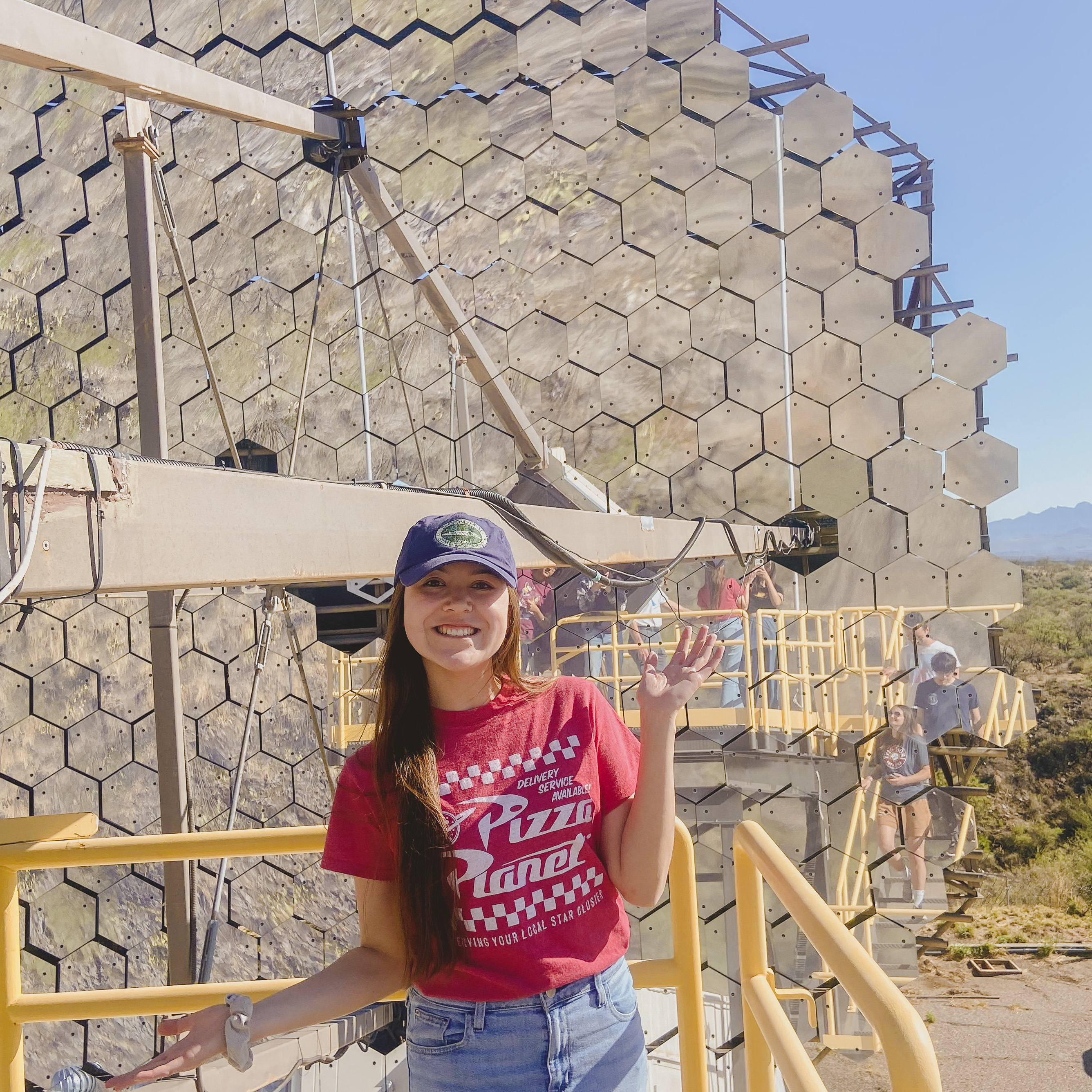
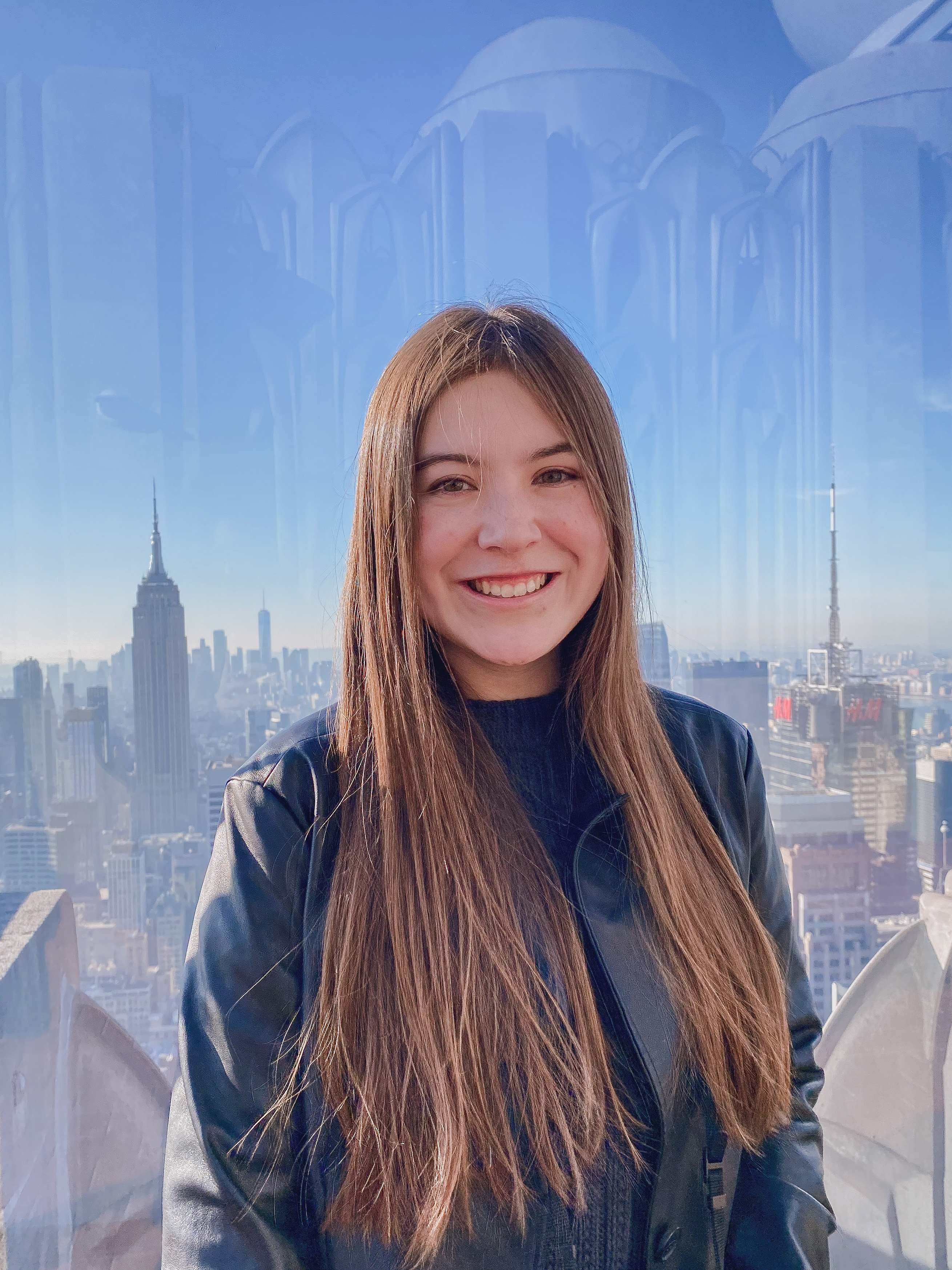
Hello world! My name is Mika Lambert (she/her), I am currently a third-year PhD candidate at the University of California Santa Cruz department of astronomy & astrophysics and an NSF GRFP fellow.

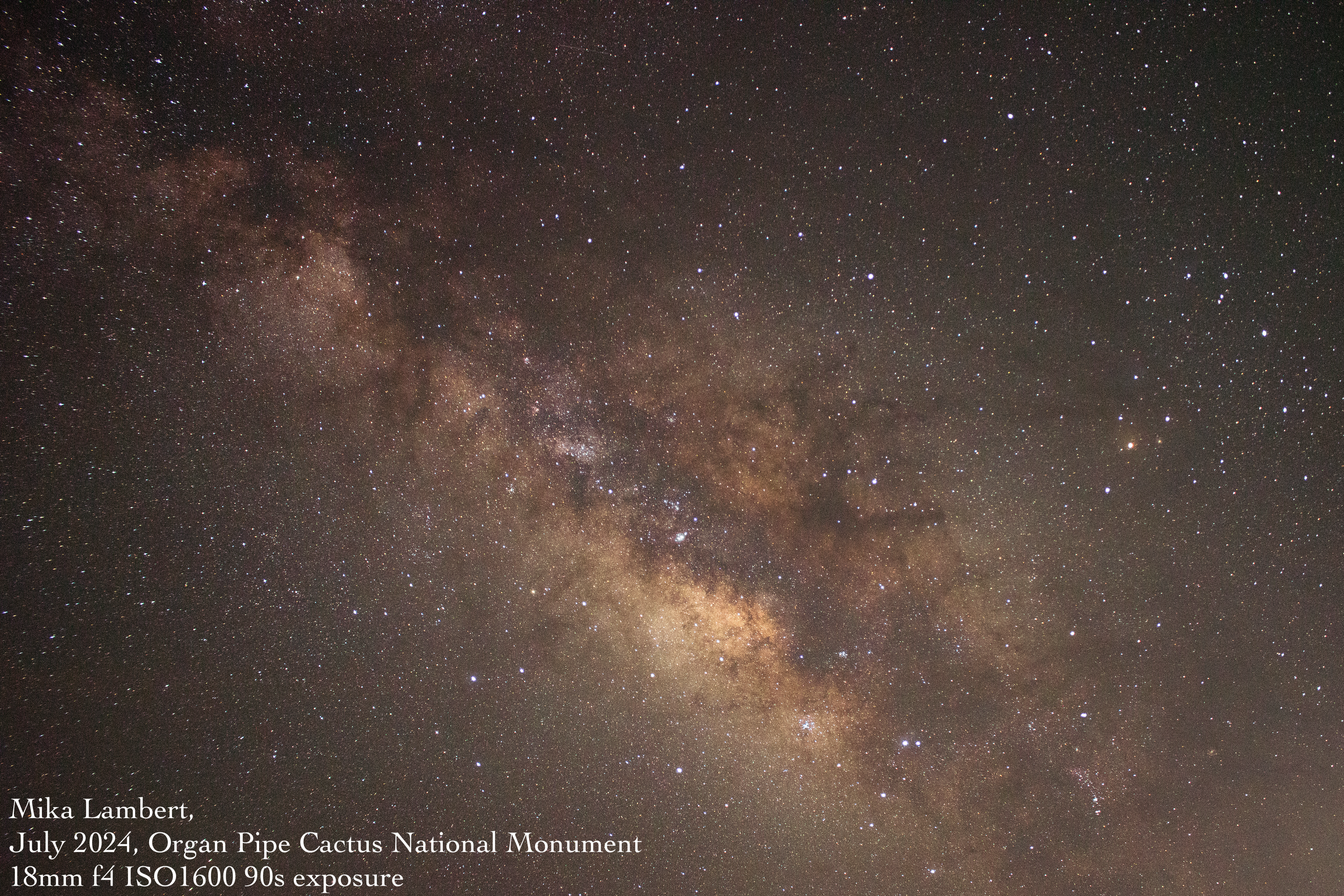
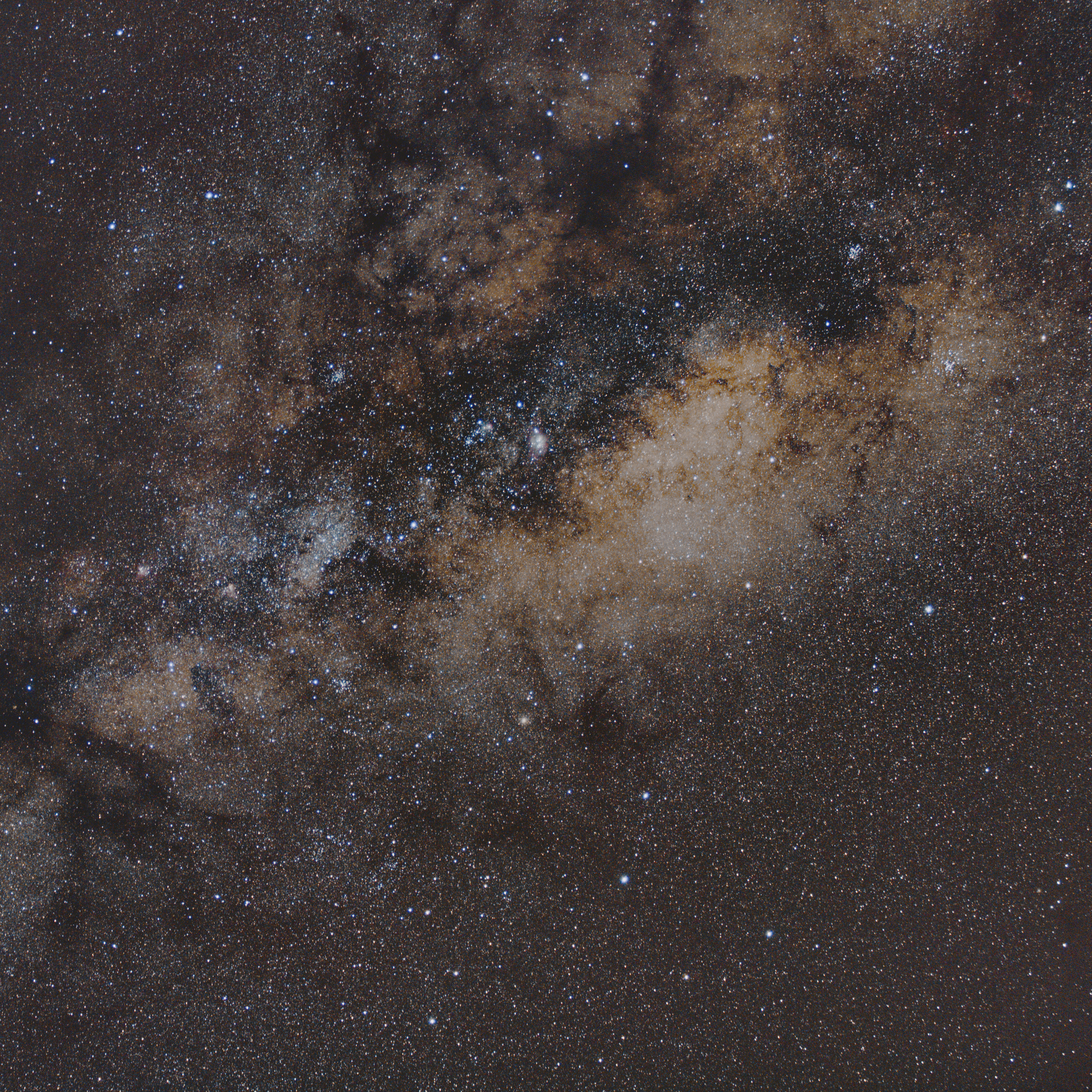
MW band
TLDR I spend my time thinking about how our Milky Way formed using the kinematics of nearby stars. We know that, in general, galaxies form by accreting smaller satellite galaxies and the Milky Way is an excellent laboratory to study this phenomenon up close. This process is quite messy but if we can observe how groups of stars move, that can tell us something about their past.

I look at stars in the disk of the Milky Way to study how the recent merger with the Sagittarius dwarf galaxy is affecting the kinematics of the disk. I also study how tidal forces (yes, like the tides of the ocean) strip stars from dwarf galaxies to create stellar streams. We can use those stellar streams to probe the nature of dark matter.

In 2023, I earned a B.S. in astronomy at the University of Arizona (bear down!). I owe my curiosity for the cosmos to my high school physics teacher and the 1997 movie "Contact." I hope to inspire the next generation of students to pursue science and follow their curiosity through astronomy outreach programs!

Current Research

I am a member of the Dark Energy Spectroscopic Instrument (DESI) Milky Way Survey. DESI provides radial velocity and metallicity measurements of millions of stars in the Milky Way disk and stellar halo.
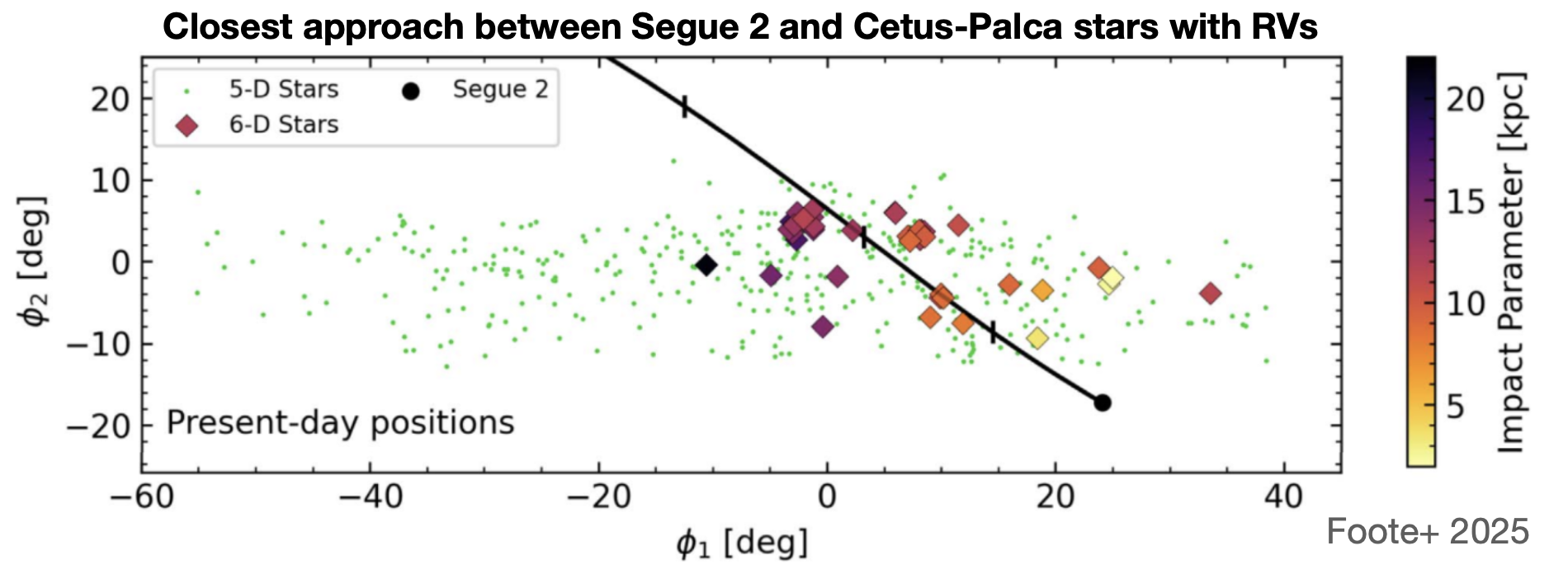
cetus palca stream collosion from Foote+2025
The recent collision between the stellar stream, Cetus-Palca, and the ultra faint dwarf galaxy, Segue 2 (in prep): We want to know how the interaction changed the shape and velocity dispersion of the stream.

We also want to put an upper limit to the mass of Segue 2. Measuring the mass of dwarf galaxies (ie subhalos) is challenging, but we know that the velocity dispersion of the stream will large if Segue 2's mass is large and vis versa. This work will help us understand the nature of dark matter (because all galaxies are made of dark matter!) and provide constraints on what exactly a subhalo can do to a stellar stream.

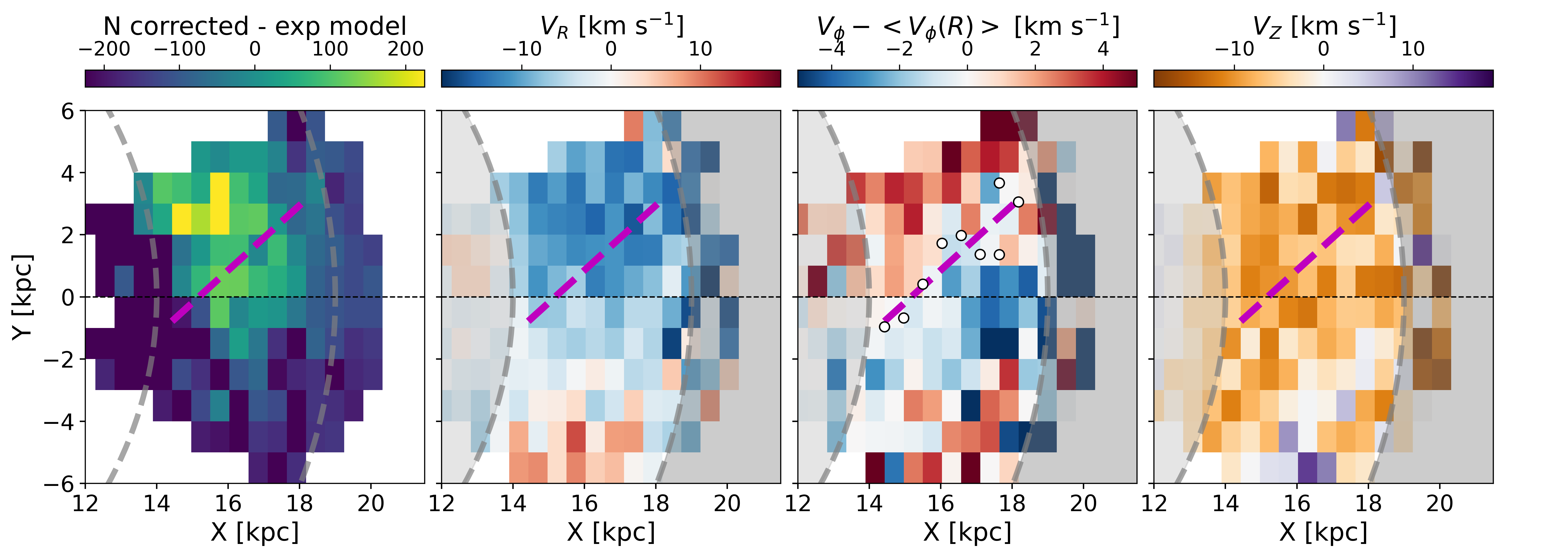
Signatures of a Tidally Induced Spiral Arm at the Anticenter of the Milky Way and a Kinematically Extended Anticenter Stream Using DESI Data Release 2

(Lambert et al. 2026)
Monoceros ring kinematics consistent with tidally induced sprial arm
How the Sagittarius dwarf galaxy is affecting the kinematics of the disk of the Milky Way: Using radial velocity and metallicity measurements from DESI, we verify that the disk is out of equilibrium.

There is an overdense group of stars in the outer disk called the Monoceros Ring that has kinematic signatures of a tidally induced spiral arm. In other words, we find that Sagittarius created a dynamic spiral arm in the outskirts of the Galaxy. We also find that a different group of stars in the outer disk called the Anticenter Stream could be part of a larger wave-like structure in the disk. Spiral arms and disks are common in other galaxies and studying the structure of the Milky Way will help us put into context how other galaxies form.
Previous Research

Systematically Measuring Ultra-Diffuse Galaxies (SMUDGes)

(Lambert et al. 2024)
a mosaic of 21 UDGs with NSCs

Ultra-diffuse galaxies (UDGs)are an increasingly popular topic in astronomy due to their peculiar properties. They have an extremely large mass-to-light ratio indicating the presence of large amounts of dark matter, and their formation process is unclear.

I developed analysis software to identify nucleated low surface brightness galaxies, specifically UDGs, and measure the properties of their nuclear sources. The goal was to measure the incidence of nuclear clusters in these galaxies and to uncover any galaxy properties that led to an increased incidence rate. The properties of the nuclear core will also be used to constrain models for the formation and evolution of these cores.

An Object at the Hydrogen Burning Limit Orbiting an Early M-type Star

(Lambert et al. 2023)

At the University of Arizona and with collaborators at Penn State, I worked on Transiting Exoplanet Satellite Survey (TESS) exoplanet follow-up characterization. I used ground-based high-resolution spectroscopy from HPF to measure radial velocities and characterize both the host stars and exoplanets.

I specifically worked on characterizing a system labeled TOI-5375. I modeled the orbital parameters, mass, and radius of the target, and concluded the companion is a very low-mass star (VLMS) at the hydrogen-burning limit and is only 400 Myrs old.

Interests

When I'm doing the "life" part of work-life balance, you can catch me at various outreach programs, painting, rock climbing or hiking!

Outreach

  • Check out my website that provides advice and resources for the process of applying to graduate programs and the NSF GRFP fellowship!
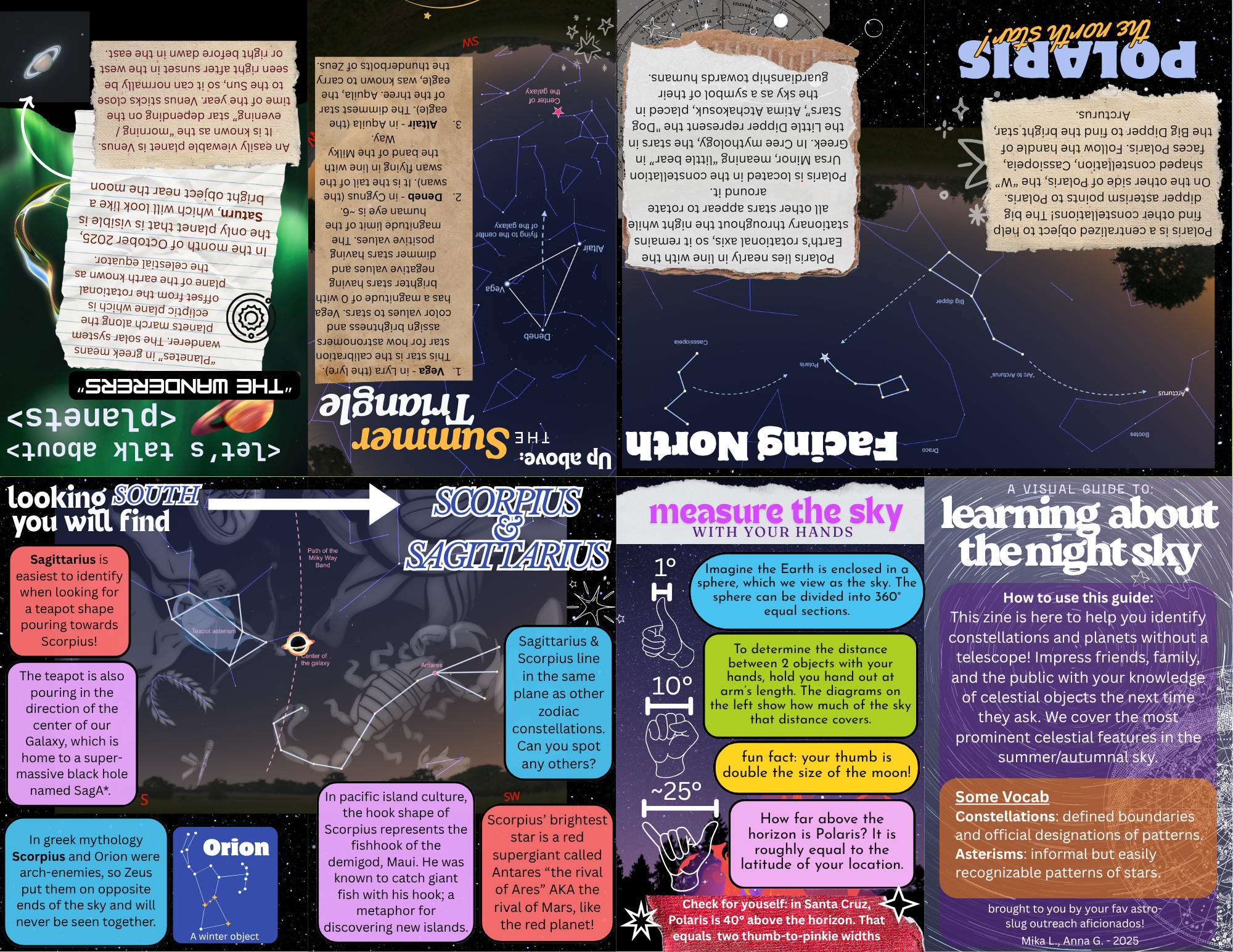
  • I created a zine to make learning about the sky a fun and easy read!

Art and Photography

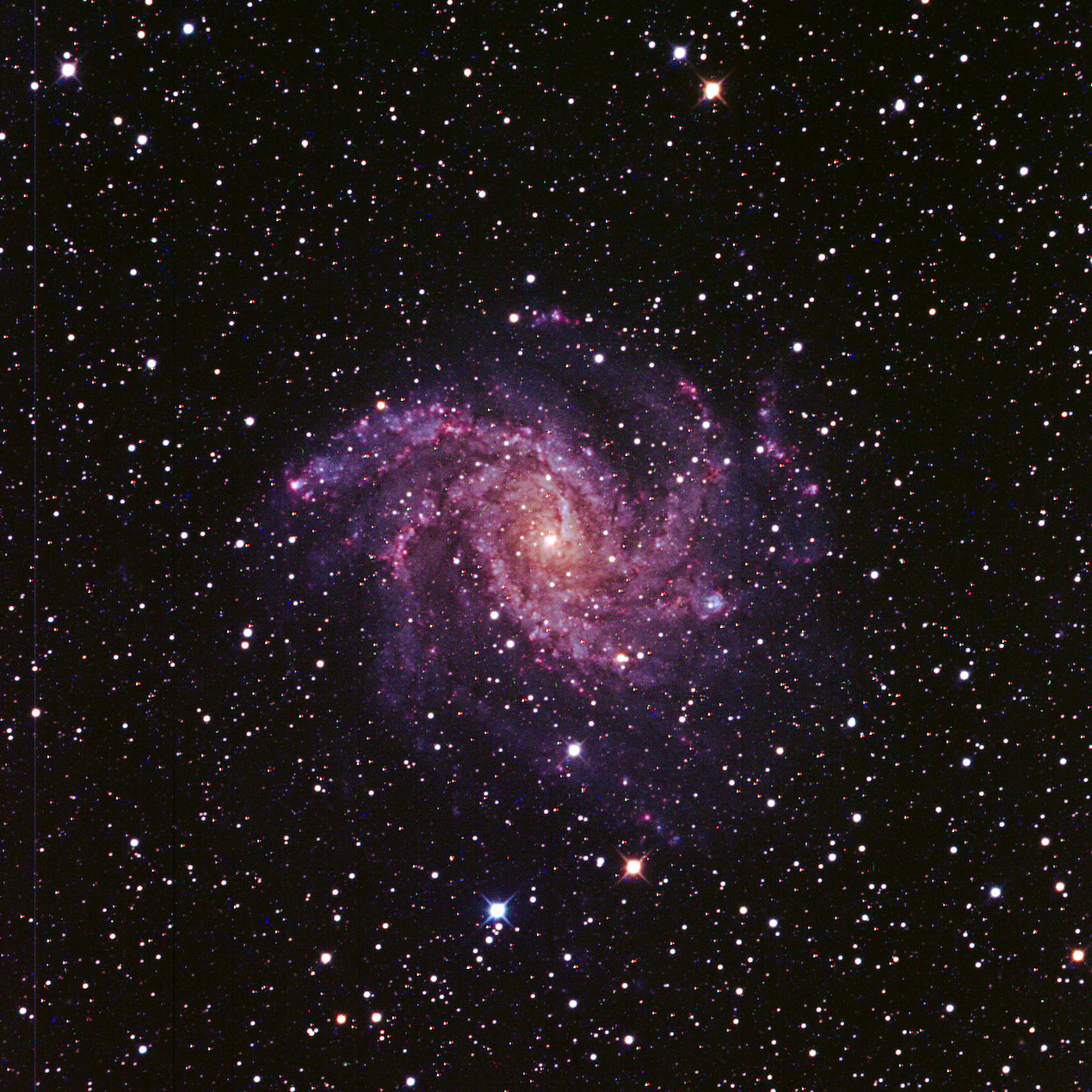
I've always loved creating stuff with my hands since I was little and my favorite medium to work with is watercolors! I have more recently dabbled in astrophotography which is a completely new form of art for me, and exciting nonetheless.

Hiking

My favorite way to stay active is by hiking! Arizona had many beautiful hiking trails through desert cacti and ancient rock formations that I appreciated while I was there. California's diverse landscape has much to offer as well! From coastal beaches to towering redwoods, I'm always looking to explore more of Santa Cruz!

My CV

updated Summer 2026

NASA ADS publications